


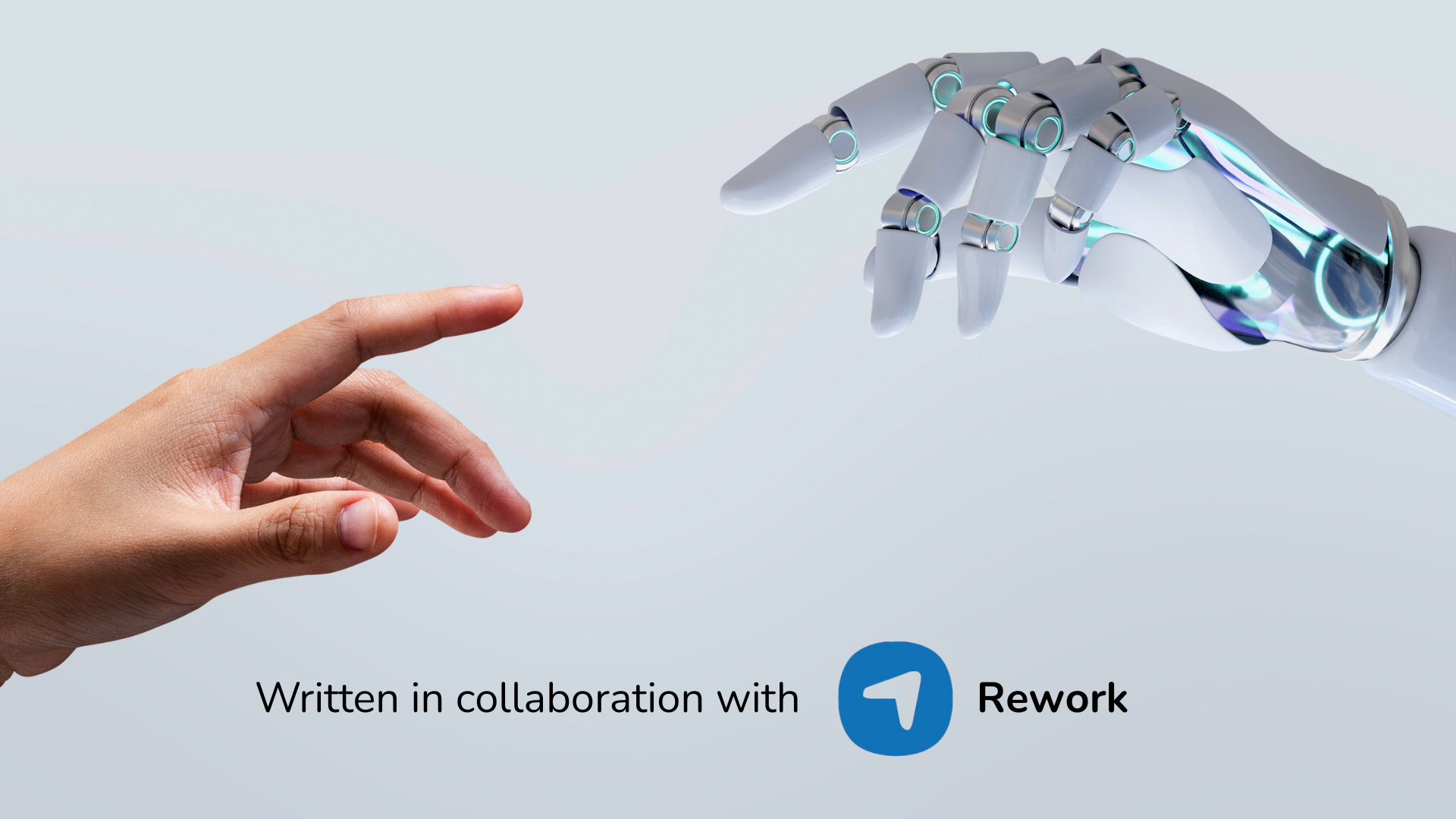

As artificial intelligence is rapidly reshaping how we work, a dominant fear has emerged: that this technology will erode the very qualities that make communication human – empathy, trust, and connection.
But what if, instead of replacing these traits, AI could be used to enhance them?
At London Speech Workshop, we’ve collaborated with Rework – an AI-first operational platform – to explore that the future of communication isn’t a battle between AI and humanity. It’s a powerful partnership – where AI provides structure, clarity and efficiency, and people bring the nuance, emotional intelligence and authentic connection that only humans can offer.
Together, these forces are shaping a new kind of workplace. One where precision and compassion are no longer in competition, but work in harmony.
What AI Teaches Us About Communication – The Logic of Clarity
Have you ever felt frustrated working with an LLM, not because it’s incapable, but because it takes multiple prompts before it finally produces an answer that feels usable? At some point, many people conclude that it’s faster to just do the work themselves.
Most of us experience this at least once.
But the truth is, the issue isn’t always AI’s incapability.
At a fundamental level, large language models don’t understand intent the way humans do. In practice, this happens through a prediction process.
When you give the AI a prompt, it doesn’t actually “think” about what you want. Instead, it looks at your input and predicts what response would most likely come next, based on millions of examples it learned from during training.
If your prompt is vague, the AI defaults to the most common, generic responses it has seen before. This is why unclear prompts often get you safe but useless answers – the AI is playing it statistically safe.
When your prompt is specific and clear, you’re helping the AI narrow down to more relevant, targeted responses from its training.
Think of it like this: the AI has access to every possible response, but your prompt is the filter that determines which ones it considers. A weak filter gets you generic results. A strong filter gets you exactly what you need.
This is why vague prompts lead to bloated, generic answers. The AI isn’t lacking intelligence; it’s lacking direction. Garbage in, garbage out.
What’s interesting is that this frustration feels strangely familiar.
How many times have you had to ask an employee to double-check or reconfirm a task?
How often does work need to be redone, not because it was done poorly, but because it wasn’t what you meant?
How many times have people quietly tried to guess their manager’s real intention?
We see the same pattern emerge: when we don’t provide clear input (specific instructions, examples, success criteria), we get generic output (work that’s technically correct but misses the mark). AI simply exposes this problem more brutally.
Humans can ask follow-up questions, but they often don’t; either because they don’t want to seem incompetent, or because they think they understand when they don’t.
Just like with AI, human communication breaks down when we skip the specifics. We say “make it better” without defining what better looks like. We set deadlines without clarifying what done means. We give feedback like “this doesn’t feel right” without explaining what right would be.
As an AI-first operational system, the Rework team has been digging into how AI works and how to best design a system where AI and human workforce can collaborate effectively. It comes down to defining a structured input and output.
This structured input and output technique that makes AI more effective works exactly the same with people, but we’ve been neglecting them. When you tell someone, “write a proposal,” you get generic results. When you say, “write a 2-page proposal with budget breakdown, timeline, and 3 comparable case studies,” you get what you actually need.
Learning to prompt AI effectively forces us to think more clearly about what we actually want. Each time we refine a prompt to get better AI output, we’re also learning to articulate our thoughts more precisely.
This clarity becomes essential as we enter an era where teams include both humans and AI. You can’t have one communication style for your AI tools and another for your team members; the same principles of clarity, specificity, and explicit criteria apply to both.
The organizations that will thrive aren’t just those that adopt AI tools, but those that use AI as a catalyst to improve how they communicate. When you’re forced to be clear with machines, you naturally become clearer with people.
In the end, in a world where both humans and machines are part of our workforce, clarity has now become the foundation of effective leadership.
Reclaiming Human Connection – The Empathy Layer
If clarity is the foundation, human connection is the force that keeps communication alive and effective. And in the age of AI, it’s under pressure – not because AI is harmful, but because it’s easy to assume that with enough structure, we don’t need the rest.
Structured systems – especially those powered by AI – excel at removing ambiguity. Tasks become traceable. Roles are clearly defined. Feedback loops are tightened. But if our human communication doesn’t evolve alongside this structure, teams risk sliding into a new kind of dysfunction: disconnection.
When the “what” becomes automated, but the “how” is neglected, we don’t just lose emotional depth – we lose alignment, morale, and trust. Misunderstandings fester.
That’s why structure alone isn’t enough. In fact, the clarity AI brings creates a powerful opportunity – not to replace human connection, but to reinvest in it. When roles and workflows are visible, teams are freed to focus on deeper questions: “How do we listen? How do we respond? How do we create trust and meaning?”
And this is where the human layer becomes mission-critical. The very structure that removes ambiguity can also surface emotional blind spots – where friction, uncertainty, or unspoken tension quietly grow. Without the right communication skills, these moments don’t lead to alignment. They lead to disengagement.
As London Speech Workshop founder, Emma Serlin, puts it:
“AI gives us extraordinary clarity about what’s happening – but it doesn’t tell us how to be human with one another when things get hard. When structure increases and emotional skill doesn’t, tension doesn’t disappear – it intensifies. That’s why human connection isn’t becoming less important in the age of AI. It’s becoming mission-critical.”
At London Speech Workshop, we offer a range of courses based on The Serlin Method® – a methodology designed not to resist structure, but to bring humanity into it. These programmes help leaders and teams reclaim the human touch in environments driven by metrics, efficiency, and speed.
They’re built to transform communication at the moments it matters most – when tensions rise, emotions run high, and clarity alone is no longer enough.
Genuine Connection helps teams move beyond transactional communication into relational communication. In clarity-first environments, conversations can easily become purely task-driven: updates, deadlines, metrics, outputs. Genuine Connection reintroduces the human signal into that system. It trains people to actively listen beneath the words, respond with empathy, and build rapport intentionally – so colleagues don’t just feel informed, but seen, valued, and understood. This is what prevents efficiency from turning into emotional detachment.
Authentic Presence ensures that structure doesn’t flatten individuality or confidence. In AI-enabled workplaces, where performance is increasingly visible and feedback loops are constant, people can become guarded, performative, or overly cautious. Authentic Presence helps individuals show up grounded, calm, and credible – regulating nerves, projecting vocal authority, and communicating with clarity under pressure. It restores a sense of humanity to high-stakes, high-efficiency environments, so people feel safe to speak honestly rather than strategically.
Navigating Conflict, through tools like CEDAR, gives teams a clear and compassionate framework for addressing tension, without resorting to avoidance or escalation. As AI makes performance gaps, accountability, and blockers more visible, difficult conversations don’t disappear – they increase. What matters is how we handle them. The CEDAR framework offers a psychologically safe structure that transforms friction into forward motion. Instead of letting unspoken issues quietly erode trust, teams learn to approach discomfort with emotional intelligence – turning potential conflict into alignment, growth, and stronger relationships.
Together, these tools form an empathy layer over operational structure. They ensure that as workflows become more precise, communication becomes more compassionate. They don’t slow teams down – they stabilise them emotionally, so clarity leads to cohesion rather than coldness.
These aren’t soft skills. They’re survival skills for the AI era.
Because while structure may set the stage, only human communication delivers the performance – building the trust, cohesion, and emotional safety that move teams forward.
Bringing It Together – A New Model for Communication
When AI-driven structure meets human empathy, a new model of communication takes shape – one where clarity and connection are no longer competing forces, but complementary strengths.
Structure enables empathy because when managers have clear visibility into project status and blockers, they can shift from interrogating (“What’s the status on everything?”) to supporting (“How are you feeling about this timeline? What support do you need?”).
Meanwhile, empathy strengthens structure as team members who feel heard and valued become more willing to give honest feedback about what’s working and what isn’t, creating continuous improvement rather than rigid adherence to broken processes.
Picture a weekly team stand-up where AI tools automatically surface project blockers and updates, freeing leaders to focus their attention on how the team is feeling and where support is most needed. Instead of spending energy deciphering problems, teams can invest their time in crafting thoughtful solutions.
This is communication at its most powerful: structured for efficiency, elevated by empathy.
And it goes beyond productivity. When structure and empathy are embedded into how people work together, they shape the culture of a business. Not just in meetings but in the atmosphere, the energy, the way people show up for one another.
This is the silent force that separates good teams from great ones, and organisations that function from those that truly flourish and inspire.
Building this transformation doesn’t require sweeping organizational change. In fact, the most sustainable shifts happen through small, intentional steps that gradually weave structure and empathy into everyday workflows.
Action Steps – How Teams Can Begin Improving Communication Today
For leaders and teams looking to evolve how they connect and collaborate in this age of AI, here’s how to begin:
1. Map One Core Workflow
Start with a single process your team uses often, which can be project handovers, client onboarding, or campaign reviews.
Gather the 3-4 people who touch this process most frequently. In a 60-minute session, map out what actually happens (not what’s supposed to happen). Ask: “Where does confusion arise? Where do handovers break down? What questions get asked repeatedly?”
The goal isn’t to fix everything immediately; it’s to see the invisible friction that’s slowing your team down.
2. Define Inputs and Outputs
Just like in high-functioning AI systems, defining inputs and outputs removes assumptions and sets everyone up for success.
For each step in your mapped workflow, define three things: What information/materials are needed to start (inputs), what specific deliverable should result (outputs), and who makes it happen (ownership).
Be ruthlessly specific. Instead of “client feedback,” write “client feedback form completed with rating 1-5 for each requirement plus written comments.” Instead of “marketing review,” write “marketing director approval within 48 hours with specific change requests or go-ahead.”
The test: Can someone unfamiliar with your team understand exactly what needs to happen by reading your process? If not, add more specificity.
3. Choose Tools That Support Clarity
The wrong tools create more communication problems than they solve. The right tools make collaboration feel natural while providing the transparency that great teams need.
Use platforms that visualise roles, timelines, and accountability clearly, without adding layers of complexity.
This is where platforms like Rework become essential – they handle the structural communication (who’s doing what, when it’s due, what’s blocking progress) so human communication can focus on meaning, context, and connection.
When implementing new tools, start with one workflow and prove value before expanding. Let your newly mapped and clarified process be the testing ground.
The goal isn’t more software, but better visibility. Simplicity fuels alignment.
4. Add Feedback Loops as Human Touchpoints
Once structure is in place, connection becomes the differentiator. And feedback is one of the most powerful and overlooked tools for creating it.
Feedback loops aren’t just operational hygiene; they’re the moments where trust is built or broken. They catch issues before they escalate, and they create a culture where people feel not just informed, but involved. When people know their voices matter, performance improves – because so does morale, ownership, and emotional safety.
But feedback is also where communication often fails first. When stakes are high or clarity is missing, conversations are avoided, delayed, or rushed. That’s why practical, emotionally intelligent tools aren’t optional – they’re essential.
As Emma Serlin puts it: “Most people don’t resist feedback because they don’t care – they resist it because they don’t feel safe. The language we use can either open the door or shut it down.”
Cultures that truly work – where people feel safe, seen, and supported – don’t happen by accident. They’re built through consistent communication behaviours. That’s where tools like COAST and CEDAR come in.
- COAST supports clear, respectful feedback that lands without defensiveness. It helps people speak directly, without attacking, and listen actively, without shutting down.
- CEDAR provides structure for the harder conversations – the ones that deal with tension, emotion, or unmet expectations. It helps teams handle conflict without avoidance or blame, turning discomfort into alignment and action. These tools aren’t theoretical. They’re grounded in neuroscience, behavioural psychology, and years of real-world coaching experience.
In fast-paced, high-change environments, feedback isn’t just a communication function. It’s a strategic necessity – the mechanism that keeps people connected, accountable, and engaged.
5. Model Transparent Communication
This is where high performance and deep connection meet – and it always starts at the top.
In times of change or uncertainty, people don’t just look for plans – they look for signals. What leaders say (and how they say it) becomes the emotional barometer of the business. When leaders communicate with clarity, consistency, and emotional intelligence, they don’t just share updates – they shape culture. They create an environment where honesty is safe, structure is supportive, and empathy is recognised not as a liability, but as a leadership strength.
But this kind of leadership isn’t innate – it’s learned, practised, and intentionally developed. Through the Serlin Method®, we equip leaders with frameworks that transform abstract values into consistent, repeatable behaviours. These tools turn intention into impact – especially when it matters most.
- OARpology helps leaders model accountability when things go wrong – owning outcomes without spiralling into shame or blame.
- The Five Perspectives gives them a way to understand and navigate conflict by broadening the lens, building empathy, and de-escalating defensiveness.
As Emma Serlin puts it: “Great leaders aren’t the ones who have all the answers. They’re the ones who can hold the room when the answers aren’t clear – with steadiness, openness, and humanity.”
This is what makes communication at the top so powerful: it regulates the room. It sets the tone. And when that tone is clear, consistent, and connected, everything beneath it gets stronger: trust deepens, engagement rises, and culture becomes something people feel – not just something printed on a wall.
This isn’t about charisma. It’s about consistency. It’s not about personality – it’s about presence. And it’s not a leadership style of the future – it’s what high-performing, human-centred organisations need right now.
A New Era of Communication is Here – And It’s More Human Than Ever
We have the chance to enter a new era of communication–one where human connection isn’t being replaced by AI, but rebuilt on stronger, more intentional foundations.
With the clarity and structure that platforms like Rework provide, and the empathy and presence cultivated through London Speech Workshop’s communication training, workplaces no longer have to choose between efficiency and emotional intelligence. They can have both and thrive.
This is the future of great communication: transparent processes that reduce friction, and human conversations that build trust, alignment, and culture.
It’s not just about getting tasks done more quickly. It’s about creating environments where people feel psychologically safe, where feedback flows freely, and where communication strengthens relationships, not just results.
And crucially, it’s not reserved for the few. Any team, in any industry, can begin to build this balance. Using structure to create space, then filling that space with meaningful moments that transform your team’s experience of work and create sustainable foundations for success.
The companies that embrace this shift won’t just perform better; they’ll feel different. More cohesive, more energised, more human.
This isn’t the automation of connection – it’s its evolution. And it starts now.
Want To Learn More?
If you’re ready to create a team environment where structure supports connection, and where people feel seen, heard, and empowered, this is a great place to start…
Discover how we help teams communicate with confidence, empathy, and genuine presence.
And explore how Rework brings clarity and visibility to your workflows.
Together, we’re not just improving how we work – we’re reshaping the very way we connect.

Start Your Communication Transformation Today
Book a free discovery call to find out how our courses and method can work for you!
