

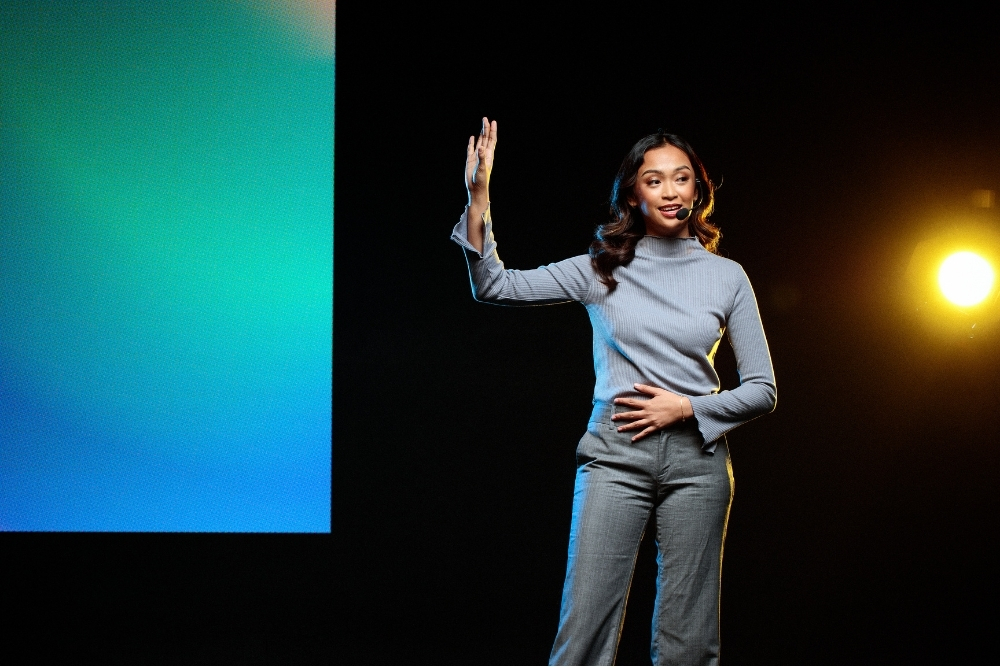

The TED Talk has become a cultural phenomenon. Not only do the speaker videos from the event get viewed over a billion times a year, but they have raised the bar for public speaking everywhere. Death by PowerPoint is out, TED Talk standing ovations are in. If you’re feeling the pressure, you’re not alone.
TED talks are powerful enough to change your life in 18 short minutes and offer wonderful models for how the rest of us can learn to speak so that others want to listen.
To demonstrate how we can borrow some of their magic, I’ve studied 3 of my favourite TED Talks to find out what exactly makes them so gripping.
1. Brené Brown – The Power Of Vulnerability
Brené Brown is a social researcher who studies human connection. In this poignant, funny talk, she shares a deep insight from her research, one that sent her on a personal quest to know herself as well as to understand humanity.
Making the content zing – what she said
In a light-hearted and amusing way, Brené makes her own rigorous academic process really clear, and she builds suspense. In stark opposite to her self-deprecating joke in the intro about her being “a boring researcher”, we can’t wait to hear what it is she discovered.
Brené demonstrates her own vulnerability by peppering the talk with relatable stories. But the stories are always linked to bigger insights that matter to us all. She knows the sweet spot in the talk; the big ideas that are key to her journey of discovery and she takes the audience there with skill, so by the time we are there, we are hooked into the big idea.
GEM: Know the sweet spot in your own story – the punchy point that you want to hit hearts and minds with, and craft the journey to this point so when the audience have arrived, they know it’s important.
Keeping the audience transfixed – how she said it
Brené really shows range, effortlessly going from light and speedy to slow and serious. Her base style is relaxed and chatty, so when she moves to serious and slow, it’s powerful.
She uses pauses and short sentences to make sure the audience stays with her. She’s walking along holding our hand rather than running ahead (which is what happens when someone talks too fast). The effect? We feel how much she wants to take us on this journey with her. And it feels good.
Gem One:
Make sure you have range – slow down for the impactful points you want to make, really deliver them, place them like special jewels into the audience’s hands.
Gem Two:
Find a base style that’s true to your personality – this will help you feel authentic. Move from your base to have range and moments of impact.
The non verbal story – how she used her body
- She stands still and uses the power of stillness, and then walks to change the mood. Her body is relaxed, which means she is free to use gesture when it is right for her story. Also, it sends signals to her that she is relaxed, meaning that she can enjoy it more, be more free in her speech and engagement and build rapport with the audience.
- She smiles a lot – genuine smiles as she laughs at herself and shares her own amazement at the discoveries she uncovered with the audience – It’s through this authentic joy that she builds connection.
- Her eyes and facial expression are brilliant. She lets her eyes dance with amusement one moment, and then suddenly goes for serious and intense eye contact, all of which helps make her talk compelling . She delivers her ideas with great care, making you understand their weight and value, and all her years of research behind them. She knows how important they are and she makes us understand that. We have a metaphor for this – if you were giving someone a diamond ring, you wouldn’t send it via second class post – you would take the greatest care to deliver it, placing it into the hands of the recipient. Brené does this.
My Gem:
Relax your body. The more relaxed you can be physically, the more relaxed you will feel, so it’s important to release tension in the jaw, shoulders, and back before you start so you can set yourself up for success. This in turn will make you feel more relaxed, and send signals to your brain that this is not a stressful situation but an enjoyable one.
The Overall Effect
Brené is one of the most engaging speakers around. In her willingness to be vulnerable with us, to share her personal stories, smile and be seen, and make jokes on-the-spot, we feel that she is genuine. She cares not only about her ideas, but how they help us, her audience. There is no arrogance, no posturing with Brené, just a fellow traveller who has been on the journey and has something to share.
2. Rita Pierson – Every Kid Needs A Champion
Rita Pierson, a teacher for 40 years, once heard a colleague say, “They don’t pay me to like the kids.” Her response: “Kids don’t learn from people they don’t like.” Her talk is a rousing call to educators to believe in their students and actually connect with them on a real, human, personal level.
Making the content zing – what she said
From the get-go we can see she is truly passionate about and engaged with what she is saying. Her stories are concise and specific, and Rita is very adept at bringing you right into the world that she has been living in. Her stories from the classroom and the heart-warming turns of phrase she used to encourage her students make you empathise with both her and the children she taught.
In our meal metaphor, we would call this ‘the spice’ – that’s the magic that’s uniquely hers. She also brought her values into her talk. In fact, the whole 8 minutes was totally and utterly infused with the values she holds most dear: human connection, the triumph of the human spirit and the power of love.
My Gem:
Find your spice – your unique stories and anecdotes – to make that personal connection, to pull your listeners in and make it personal.
Keeping the audience transfixed – how she said it
- Rita kept the audience with her at all times by using shorter sentences, pauses and emphasis to bring out different words that mattered.
- Rita used a range of tones, volumes and speeds to keep things interesting. Sometimes she was very high energy, speaking with a louder voice, more varied tones and at a faster pace. Other times she’d move to another area of her story where she wanted to make more of a hushed impact and she’d get quieter, slow down and draw the audience in to a more intimate connection. This is a great example of what we call Connection Spaces. Moving from one way of connecting with the audience to another. Through using these different modes of connection, she kept her talk really engaging. She was never monotone or stuck on one pace at any time.
My Gem:
Use connection spaces to create an interesting landscape for your speech, more from intimate – a space with quieter tones and more focused attention and body language, through to performance, a space with big, broad gestures and big ideas to keep your audience engaged.
The non verbal story – how she used her body
Rita owned the space by using a lot of gesture. Her facial expression was animated: she smiled alot, her eyes were bright. She delivered her points to the audience with eye contact, like she was handing over a precious jewel. Her arms and hands were often outstretched from her body as she emphatically gesticulated to back up her points. And what is clear is her energy and her passion, which is contagious. When you watch the video, look out for how she is making her points with her body. She takes great care to really make them land.
Gem:
From your belly button upwards is your performance space. Use your hands and release your elbows from your sides when you are making particularly impactful points. This will help them stick in your listener’s heads.
The overall effect
Rita is a beautiful example of a great communicator, and there is plenty we can all learn from her example. Having her speech so infused with what mattered to her made us love her and made us connect with her from a heart space as well as a headspace. When you get your audience connecting not just intellectually but a heart and a value-driven place as well, then you can really make an impact.
3. Sir Ken Robinson – Do Schools Kill Creativity?
In his funny and light-hearted talk brimming with sharp insights, wit and acute observations, Sir Ken Robinson makes a case against the education status quo.
Short sentences, short stories and easy-to-follow points make the whole thing a delight to watch. Unsurprisingly, it’s the most watched TED talk of all time, with 57 million views and counting.
Making the content zing – what he said
Where Sir Ken really nails his talk is in the content – it’s absolutely packed with hilarious, poignant and thought-provoking stories. He’s incredibly generous with his stories, making you feel like you’re hearing an intimate secret that hasn’t been shared with anyone else.
His witty tales are powerful because they unite us in the joy of delighting in the innocence and naive charm of children. He frequently laughs himself, so genuinely funny are the stories, and you can’t help laugh with him. This laughter and sheer pleasure of listening to him just builds and builds, and he seems to be enjoying himself too.
As the listeners, we feel in safe hands. The strength of his content means he can veer off course but we know he’ll always come back to the centre because his foundation is so solid.
Sir Ken also makes his values very clear: all people are born artists – the problem is they become educated out of it as they grow up.
He saves his most powerful story for last and brings it home with a powerful call to action – ‘we have to rethink the fundamental principles on how we are educating our children.’
The ingenious way he uses the delivery of humour is also something to pay particular attention to. Watch how he tells a funny story to get people engaged, and then pulls it together with a powerful line – the soil is now fertile! – and then he swoops in with a killer, profound point that sticks. And all along he has us hanging on his every word….
My Gem:
Know the one key thing you want to get in your audience’s heads and have a story, with your unique perspective and something of what really matters to you woven into it. Your audience will love it. And if you have a funny bone, then let it out, it will be your unique insights and experience that will get your audience chuckling with you.
Non-verbal communication – how he used his body
Right from the start, Sir Ken embodies a relaxed energy, which instantly puts the audience at ease and lets them know they are in the hands of a pro. He oozes this easy confidence throughout the talk. This relaxed space helps him to build an incredible connection with the audience. It’s hard not to be drawn in by his authenticity. While he hardly moves his position, he makes great use of gesture when he gets more emphatic or enthused.
He uses eye contact to deliver his points and emphasise. His questioning – Don’t you think? Do you? – is accompanied by eye contact with specific members of the audience. Through this he creates a shared space, where laughter can easily flow and there is no wall between the stage and the seats.
My Gem:
Use eye contact to really connect with the audience, singling out individuals if you want. Using questions as a device to increase engagement is also a great tip!
Talk delivery – how he said it
His vocal energy is very calm and steady, and actually, when you watch closely, you can see he has trained himself to do this. Sometimes his words come out in a garble – particularly in the first minute of the talk – and he catches himself, and starts the word over, emphasising and slowing down over the key words.
He downward inflects, which means that he comes across as self-assured, and speaks in short sentences and uses plenty of pauses. The pace is safe, easy to follow, and means there is plenty of time to laugh at his numerous punchlines. This is the communication equivalent of being in a jacuzzi – bubbly and warm – and very easy to listen to.
Listen to how he really plays with pace. Frequently, he speeds up quite fast, but he gets away with it because he is landing key points, speaking in short sentences, and leaning into or highlighting in important words. The fast, chatty pace is nicely counterbalanced with a lot of pauses. He leaves a generous amount of room for the audience to laugh.
My Gem:
You can earn the right to speed up by building a connection with your audience. When they are truly with you, you can skip, run and jump and they will come along for the ride. You are the master of the energy in the room, tune into this when you hear a speech and see how you too can play with this when you next deliver a talk or presentation.
The overall effect
There are also moments where Sir Ken is so present, so creative, that you wonder whether he’s making up parts of his talk as he goes along. The preposterous idea that Shakespeare had a Dad, and was in someone’s English class once – is one such example.
This is a beautiful demonstration of how authentic and engaging it can be to remain open. While you want your talk to be well-practised, it shouldn’t be so polished as to sound devoid of any spontaneity.
While it can be daunting to watch charismatic speakers and consider them in a completely different category from us, it’s worth remembering they were in our shoes too once.
TED speakers are chosen for their ideas, not their presentation skills. Many speakers are not naturals and receive months of coaching and communication training to get them ready for their talk.
“Presentation literacy” isn’t an option anymore, according to TED Talks curator Chris Anderson. “It’s a core skill for the 21st century.” Anderson calls Presentation and Public speaking skills a “superpower” for those who want to express their ideas. And as demonstrated by these three impactful public speakers, storytelling is absolutely key to presenting.
That’s exactly the superpower we help you to tap into at London Speech Workshop.
Want To Improve Your Own Communication?
Our Effective Communication course will support you to be more confident and authentic as a public speaker through verbal and non-verbal communication techniques. Once you’ve got our set of good public speaking skills in your toolbox, the world is your oyster!
If you’d like to find out more about how to be a great public speaker, book a free 15 minute discovery call with our team today.

Start Your Communication Transformation Today
Book a free discovery call to find out how our courses and method can work for you!
